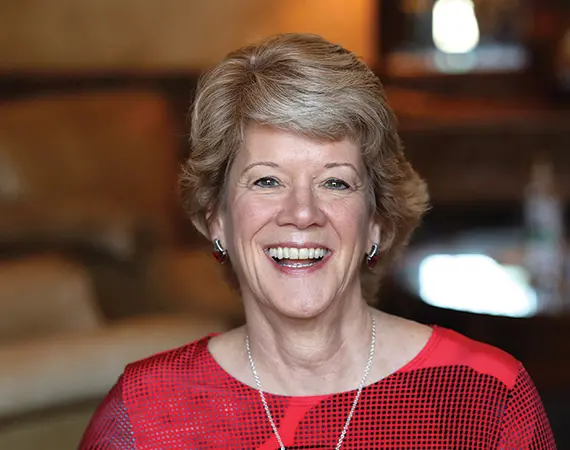
It is always healthy for a business to step back from the day-to-day urgencies that occupy our attention and take stock of who we’ve become. Reading Bob Kill’s “exit interview” in this issue of Enterprise Minnesota magazine gave me just such an opportunity.
For nearly two decades, Enterprise Minnesota has evolved into an organization that would have been hard to imagine when it was still called Minnesota Technology and struggling for survival in the wake of the Greater Minnesota Corporation’s collapse. What exists today — a lean, focused nonprofit that helps manufacturers improve operations, grow profitably, and connect with a broader manufacturing ecosystem — bears little resemblance to the lottery-funded agency Gov. Rudy Perpich created to support rural businesses. And yet the through-line is unmistakable: an enduring commitment to Minnesota’s small- and medium-sized manufacturers, who provide the entrepreneurial heartbeat of our economy.
Those companies are our audience. Our reason for being is the competitive well-being of Minnesota’s small manufacturers. These are not sprawling corporate giants. They are family companies, closely held enterprises, and quietly ambitious shops scattered across the state that exemplify the entrepreneurial spirit that drives the American economy.
One of the most consequential shifts in Enterprise Minnesota’s evolution was moving away from a traditional government-agency mindset and becoming a client-driven nonprofit organization. That shift enabled us to look at manufacturers from a business perspective and become more adaptive, more responsive, and more grounded in the realities of running a business in a competitive world.
With that pivot, we embraced the move from free consulting services to a fee-based model. Having some skin in the game — even at reduced fees — gave our work more value. It made companies more committed. It sharpened our own accountability. And it made us more willing to adapt our services based on what manufacturers actually needed, rather than what we assumed they needed.
At the same time, we embarked on a decades-long project to amplify the value of manufacturing, not just to outsiders but to manufacturers themselves. We launched the annual State of Manufacturing® survey to raise the profile of manufacturing among policymakers, the media, economic development agencies, educational institutions, and the professionals who support manufacturers.
It did that, while injecting a sense of pride in the manufacturing community itself. The idea was to give manufacturers a voice and to connect them with one another. We didn’t fully appreciate how powerful that platform would become. Seventeen years later, the survey has grown into a trusted annual benchmark precisely because it never stood still.
That resistance to inertia permeates the entire Enterprise Minnesota organization. Over the years, we’ve adopted many of the operational improvements we share with clients.
Enterprise Minnesota has always encouraged clients to pursue ISO certification; 11 years ago, we went through the process too. Though it’s relatively unusual for a service company to seek ISO certification, we’ve found that it’s an outstanding management system.
We’ve also worked with our consultants to improve Enterprise Minnesota’s internal processes, such as through value stream mapping. These efforts have helped us save staff time and improve the quality of our events, magazine, and finances.
As we listened to clients and utilized the data in the State of Manufacturing survey, we expanded our consulting services, adding expertise in areas that improve opportunities for manufacturers to grow profitably. We also grew our peer councils around the state, created exclusively for manufacturing executives from small- and medium-sized companies, allowing them to speak candidly and confidentially with their peers about business challenges and opportunities. We started with one peer council, and today we’re up to 11. In addition, we host dozens of manufacturing workshops every year, giving manufacturers a glimpse of the consulting services we offer and actionable steps to improve operations.
Like the manufacturers we serve, we’ll face new hurdles in the coming years. As the economy and manufacturing evolve with changes in technology and demographics, we’ll continue to be flexible, adding new services where needed. We’re excited to see where the next two decades lead us.
Return to the Spring 2026 issue of Enterprise Minnesota® magazine.