
Driving down Highway 14 from Rochester to Owatonna for his first Enterprise Minnesota peer council meeting, Mike Jensen didn’t know what to expect. The group was made up of seasoned manufacturing company owners who had been on the council for years. He was the new owner of Gauthier Industries, taking the helm in 2008 in his 30s, and he wondered: Would the group welcome him and be willing to share their wisdom?
Jensen was pleasantly surprised by how open the peer council members were with each other about their companies and experiences as owners. They paired insights with actionable advice that could help other participants operate their businesses better. The candor and trust that the group clearly maintained with each other enticed Jensen to keep coming back, month after month, for 18 years and counting.
“They are all very seasoned manufacturers who have been in business for a long time. It has been a significant benefit for me to hear their stories, experiences, and challenges. Some of the challenges can make or break you and require you to make critical decisions,” Jensen says. Over the years, he has been both the one seeking advice and one of the people providing counsel. “I went from the young pup in the room to one of the elders.”
The Owatonna-based Professional Business Advisor (PBA) peer council, Enterprise Minnesota’s oldest group, is one of 11 such councils for manufacturing leaders that convene across the state. They each have a different composition — Jensen’s is for company owners — but they share a common structure. Meeting monthly, the peer councils all aim to help manufacturers grow profitably by providing information, serving as a sounding board, and helping members work through difficulties they face in running their small- and medium-sized manufacturing businesses.
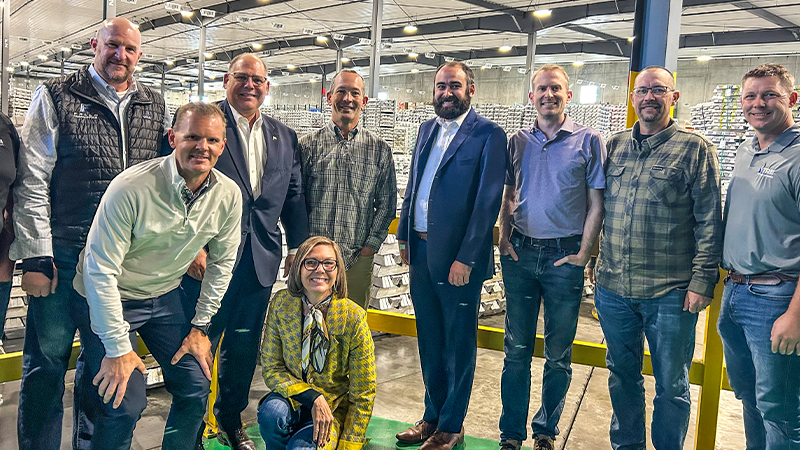
Enterprise Minnesota carefully cultivates each peer council of 10-12 members to ensure that the businesses are not competitors and that participants have the camaraderie necessary to truly dive into the details. The number of participants in each council is capped so members can really get to know each other. It also ensures that participants share common ground by keeping each group focused on specific manufacturing roles, says Steve Haarstad, an Enterprise Minnesota business growth consultant who facilitates a Monticello-based peer council, which is comprised of top executives including CEOs, presidents, general managers, and owners. In addition to executive peer councils, two other peer councils bring together leaders working in operations at various manufacturers.
“It’s important to distinguish the peer councils in that way. The people in the room are dealing with the same set of issues,” Haarstad says. “It would be limiting if we had a mix of functions like human resources and sales leaders and operations. The functional leaders are just not able to contribute in the same way as other CEOs would.”
Companies with leaders on multiple councils see additional benefits. Matt Doherty, president and co-owner of Industrial Fabrication Services in Lake Crystal, has been on the PBA council for about three years. Another leader from Industrial Fabrication Services belongs to an operations-focused peer council. They each bring fresh ideas to the company thanks to information gleaned from their respective councils.
Longevity is a key component of the PBA council, which has been gathering since 2002. Many of today’s participants own companies that have had a seat at this peer council table for much of that time. Some are even second-generation participants who took over both their parents’ companies and their peer council membership.
Justin Akkerman, the third-generation owner and president of Akkerman in Brownsdale, had similar trepidations to Jensen when he joined the council. An engineer who joined the company in 2014 and became president and owner in 2020, Akkerman knew that his dad had great relationships with other peer council members. Would they accept him?
“Most of the guys were there for quite a while and they knew my dad, and we’re just different people,” Akkerman says. Turns out his worries were unfounded, and it helped that another next-generation owner joined the peer council around the same time. “It helped that the peer council knew the history of the business of Akkerman. I was very comfortable sharing with the group.”
By fostering long-term membership, participants truly grow to know and understand their peers’ businesses, challenges, and opportunities, says Abbey Hellickson, a business growth consultant with Enterprise Minnesota who has facilitated the PBA peer council for nearly a decade. This perspective makes their feedback and advice highly actionable.
“It’s all about the relationships and the connections they make with each other. There’s such a high level of trust in that room. People are kind but honest, and they are respectful,” Hellickson says. “They know each other’s businesses inside and out, and they want them to be successful. This group has connectivity and respect for each other, and that’s why they keep coming back.”
How councils work
Each of Enterprise Minnesota’s peer councils follows a similar format. At monthly meetings, groups spend about five hours of formal and informal time together. Sessions typically include a deep dive into a discussion topic, time to connect with members about ongoing challenges, and opportunities for business updates and networking. Facilitators regularly bring in guest speakers to share their expertise, whether that’s about business law, health insurance, or new government regulations. Each quarter, a group either tours one of the member’s facilities or an outside manufacturer’s business.
Councils cover “anything and everything — all the questions that you might have when you’re a business owner,” says Enterprise Minnesota business development consultant Kurt Bear, who serves as the second chair for three peer councils, including the PBA council.
“It’s not out of the question to say that these people act like an advisory board for each other. They have gone on for a long time, and they develop a personal and professional relationship with each other,” says Bear, noting that many peer council members reach out to each other for advice in between meetings, too.
Joe Plunger, CEO of Midwest Metal Products in Winona and chair of the Enterprise Minnesota board of directors, notes that the confidential setting is a huge asset for owners, who often can’t or don’t have internal people to talk to about sensitive topics. “It’s an opportunity to discuss things very openly and frankly with a peer-level group that might be difficult or impossible to discuss within your organization, like how to deal with partnership problems or whether to have a family succession versus an outside succession,” Plunger says. “Those are pretty difficult discussions, but in that forum, you’re safe.”
Mentoring each other
Peer councils’ mix of ages and experience levels is another important aspect of their structure. In many cases, some of the more veteran manufacturers serve as mentors to the younger leaders, while the younger leaders bring fresh ideas.
“We don’t want to see someone go through an unfavorable situation that we’ve been through. What better way to learn than to talk to someone who you know and trust who has been through a crummy deal themselves,” Bear says. “As we go through life, we really have an obligation to mentor others, and we should also be willing to be mentored, and that happens at peer council.”
Doherty of Industrial Fabrication Services likes having a safe space to cover a range of issues with people who understand and might be experiencing the same challenges. “There is a reason why they say it’s lonely at the top,” he says. “Sometimes you have to be careful of who you’re bouncing ideas off or vetting your thinking. This is a great way to do that with people who have some background on your company. They can offer guidance on what they did when they were in that situation. I joke about it, but it’s nice to know that you’re not alone in the struggles you’re having.”
As he was transitioning into ownership of Gauthier, Jensen found it valuable to learn from other leaders on the peer council instead of reflexively staying the course that previous owners took. Though he had been with the business for years and served as the plant manager, it was a different ballgame to become the owner. Jensen gained insight early on into how peer council members conduct due diligence on things like renewing health insurance policies.
“It forced me to go back and say, ‘I need to do things a little bit differently than we did in the past,’” Jensen says. “Some of those things take work. But if you don’t do the due diligence, you might be missing out on an opportunity.”
Solving burning issues
Along with discussing the ins and outs of day-to-day operations, the councils often serve as a vital resource during macro challenges. Whether it was the Great Recession and COVID-19 pandemic or recent struggles with tariffs and supply chains, members share their strategies and guide each other.
Jensen took over as co-owner of Gauthier just before the Great Recession hit and had to lead the company through what he calls the biggest challenge in its history. Having the peer council to rely on then and during the pandemic was essential to navigating these tumultuous times. He especially appreciated learning what other manufacturers were doing to cope.
One topic that comes up often in the PBA council is succession and how current owners are planning to handle transitions as owners move toward retirement. It’s of critical importance to have a confidential setting to raise concerns about who could lead next, the timing of a sale, or requests from a potential buyer, Bear says.
For many participants, a highlight each month occurs when peer councils discuss fast burns. These challenges are the problems that keep leaders up at night — the thorny issues without easy solutions. It can be anything from how to handle a problematic employee to a production or customer issue. Haarstad sees consistent themes covering seven categories, with operations, leadership, and workforce concerns consistently ranking at the top. Other common fast burns involve processes, systems, investments in equipment, and plants’ organization.
By the time participants bring up a fast burn, they often are frustrated and ready to take action, Hellickson says. It helps that the group knows the inner workings of each company, allowing people to give relevant advice. And the owners do listen.
“They want to do something to get rid of that issue,” Hellickson adds. “Sometimes they want confirmation that the action they are taking is the right one, and sometimes they want advice on what action to take. We have to make sure they feel safe asking these questions, and it’s a judgment-free zone.”
Seeking expert insight
Hellickson shapes the agenda of the PBA council by paying attention to themes that come up repeatedly during fast burns and from questions that members have been asking. Each monthly gathering has a meaty discussion based on an article, book chapter, podcast, or other resource to both educate and get the conversation going. Plunger likes that participants can shape the agenda by bringing up topics that could help them operate their companies, from cybersecurity and insurance to the latest legislation coming out of St. Paul.
Haarstad has a similar approach. He lines up internal Enterprise Minnesota experts or outside resources to speak to the group about issues that come up during monthly meetings. At the Monticello-based CEO peer council, recent speakers have covered leadership development, human resources, new state mandates covering sick time and paid leave, and tax strategies.
When speakers visit with peer councils, participants gain access to an array of expertise that would likely be out of reach for most small manufacturers. It would be a stretch for a small- to medium-sized company to afford such wide-ranging advice in one year from lawyers, bankers, insurers, benefits professionals, and more, Plunger says.
“For many people involved in that size of business, our resources are limited to engage with somebody who might have those kinds of experiences or insights,” Plunger says. “For what I think is a reasonable yearly cost, we have a dozen sessions with people who can provide us really valuable information. They give feedback on questions we have and cover subjects we might not have broached at all without exposure to this group.”
Unmatched networking
In addition to serving as resources and sounding boards for each other, peer council members often help in other ways. Someone might inform the group that an equipment provider is especially hungry right now, while another member might explain how a vendor saved them a significant amount of money, Jensen says.
Plunger agrees that advice he receives from peer council members contributes to his company’s success. “I have found incredible value in the insights of the people from outside my organization with respect to things I’m dealing with,” he says. “I’ve gotten lots of great advice and good ideas and I’ve been made aware of things I otherwise simply would not have run across in my normal day-to-day activities. I’ve made confidants and friends. Even outside of peer council meetings we lean on each other with questions and in some cases, we end up doing business together.”
Seeing these connections extend outside of peer council meetings is something Haarstad has noticed during his tenure leading the groups. “As a natural extension, people start to build trust in one another and form relationships,” he says. “It commonly becomes business connections where this member becomes a supplier to that member, or this member becomes a customer to that member. It also can become a good referral source.”
Akkerman does business with several of his fellow peer council members. Knowing other owners and their operations so well provides Akkerman with a level of comfort and pre-existing vetting. “I know their business and their quality of work, so why not do business with them?” he says.
When the company is getting ready to make a change, for example with wages, benefits, or procedures, Akkerman likes surveying peer council members to check his company’s plans against others’ operations. “I’ve learned that you can’t take it all on yourself,” he says. “You have to reach out, and there are many good people to help you. Take advantage of that, and don’t think you have to solve everything on your own.”
Return to the Spring 2026 issue of Enterprise Minnesota® magazine.