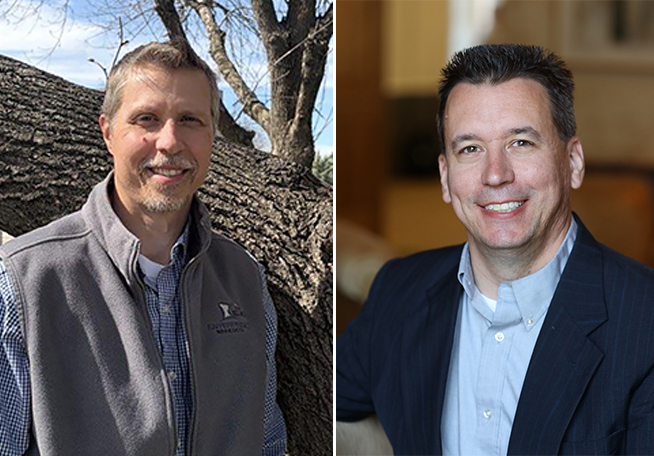
Steve Haarstad, one of Enterprise Minnesota’s most experienced business growth consultants on strategy and exit planning, spent several months helping a client develop a strategic plan. With Haarstad’s guidance, company leaders collected data, conducted team sessions, and plotted a sharp, detailed strategy based on their long-term vision. They high-fived at its completion. And then, Haarstad says, “we were done.” And he really means done.
The plan went on a shelf, its well plotted tactics overwhelmed by day-to-day urgencies; the company went back to what he calls “growing by accident.”
That pattern repeated itself enough times that Enterprise Minnesota changed its approach to working with clients. The one-time project still has its place. But consultants who specialize in quality management and certification, strategic planning, and leadership development are increasingly structuring their work around a simple insight: The most meaningful work isn’t the initial engagement. It’s what comes next.
They call it sustainment. And for the manufacturers who’ve embraced it, the difference is transformational.
From the bookshelf to the floor
The result of too many one-time engagements, Haarstad says, was a big three-ring binder that collected dust.
The fix, he realized, wasn’t different tools or a better plan. Most of those binders contained excellent work. The key was to build execution into the engagement from the get-go. “With the new approach, we take time to put that plan together, get clear direction on where you’re trying to go, and decide how we want to assign and apply our precious resources of time, energy, and finance. We’re deliberate about actions we’re going to take right now,” he says.
He typically structures a project over a full year: roughly three months are devoted to developing the strategy. Then he schedules three quarterly check-ins to enable the company to review progress and set the next round of quarterly priorities.
“It becomes a 90-day rhythm,” he says. “We get into a cadence and never lose sight of the longer-term goals and priorities. Every three months we’re translating those goals into something we can do right now.”
At the end of that first year, the conversation turns to renewal. “Most clients want to maintain regular check-ins,” Haarstad says. “And among those who don’t, about half decline initially — only to call back six to nine months later saying, ‘We thought we could do it ourselves, but it’s not working. Will you come back?’”
The value in the ongoing connection comes from at least four sources.
One:
Accountability makes it stick
“The plan is important. You’ve got to know where you’re headed,” Haarstad says. “But a mediocre plan that’s executed will outperform an outstanding plan that’s not executed every time.”
The execution component requires discipline. Reviewing progress every 90 days, resetting priorities, learning from what worked and what didn’t, and showing up to the next quarter with accumulated experience and knowledge demands time from leaders who are often pulled many directions.
“Bringing accountability to the process and to the client helps create that discipline,” Haarstad says. “They know we’re going to connect again in 90 days, and I’m going to ask how they did.”
Dan Ortloff, president of Falls Fabricating in Little Falls, Minn., knows the value of accountability first-hand. He came to Haarstad when he and his partners bought the business, which offers engineering, sheet metal fabrication, machining, finishing, and assembly. Haarstad helped guide leaders of the 89-employee operation through a year of strategic planning, developing annual and quarterly objectives, a three- and five-year plan, and a mission and values statement. But when it came time for execution, Ortloff and his partners decided to go it alone.
“We thought we could handle the strategic objectives and ongoing planning amongst ourselves,” he says. “But we realized it was better to have someone from the outside coordinating and leading it.” After 18 months, they re-engaged Haarstad.
The team meets on its own every two to three weeks to discuss progress on quarterly objectives. But they’ve found the quarterly cadence and check-in with Haarstad creates accountability that internal meetings alone can’t replicate. They know he will be in the room at the end of each quarter, asking if they did what they said they’d do, and that changes how the work gets done. “You know that in three months Steve’s going to follow up,” Ortloff says.
Haarstad says internal discipline leads to achieving better results. “Clients stay focused and apply their resources in the right direction. They have a better sense of what they can accomplish, and how to achieve realistic goals.”
Keith Gadacz, an Enterprise Minnesota business growth consultant who helps manufacturers pursue ISO 9001 and other quality certifications, makes the same point with a simpler image. “You don’t ask your trainer to help you the week before the marathon,” he says. “You ask for help months earlier because ongoing accountability builds over time.”
Having an objective outside voice ensures discipline never loses its value, he adds. “There are organizations who should graduate from our services yet don’t because they like the accountability.”
Two:
Quality is a behavior, not an event
“The sustainment methodology is about behaviors. It’s about making sure the systems are functioning and healthy. It’s not about last minute cleaning up,” Gadacz says. And it applies across the services he provides, which can take several forms.
Some clients want third-party auditing at regular intervals — production audits, office audits, management system audits — so the certification reviews never present surprises. Others want a combination of audit support and engagement around management review, the structured process of analyzing operational data and making decisions based on it. Another portion wants Gadacz in the room for their management reviews simply to ask questions that push leaders to think rigorously about what their data is telling them.
Larry Van Iseghem, founder and president of Van Technologies just north of Duluth, sought Gadacz’s assistance with creating a dynamic quality management system that included ISO 9001 certification. Van Iseghem had built quality systems from the ground up at his previous company, and when he started Van Technologies in 1991, a company that engineers liquid coatings for industrial manufacturers, he wove strong quality practices into operations from the beginning.
When Van Iseghem engaged Enterprise Minnesota to help prepare Van Technologies for ISO certification, Gadacz found a company that was already well-positioned. They achieved certification in eight months, a quick turnaround by any standard.
But certification was not the end goal for Van Iseghem. “Keeping your quality program requires ongoing attention,” he says. “If you don’t stay current, you can lose your certification. Keith keeps us current and accountable.”
That’s by design. Quality management systems, Gadacz explains, are built on a continuous improvement model. The Plan-Do-Check-Act cycle underpins the entire ISO framework. Using the same tools in the same ways year after year doesn’t satisfy that standard. “Without improvement, it’s hard to show that the QMS [quality management system] is healthy,” he says.
Gadacz also tracks changes in ISO requirements. “He stays current with the specifications and certification criteria,” says Van Iseghem. “The standards do change, and it would be difficult for me to hire someone internally for this. It wouldn’t be a full-time position, and you need a professional. When I can get those resources from Enterprise Minnesota, I have full confidence we’re in compliance and moving forward.”
Van Technologies connects with Gadacz three or four times a year. They maintain connection via email between meetings. It’s a low-key cadence that provides Van Iseghem with an outside set of eyes that isn’t embedded in the company’s day-to-day operations. “We are a better organization now, and we continue to get better every day,” he says. “Keith is a key support in that.”
Larry’s daughter Kristen Van Iseghem, who manages many of the company’s day-to-day operations, describes what the ISO system feels like from the inside. “The beginning is a bit of a learning curve,” she says, “but once it’s built, you’re living in it day to day and you don’t feel it.”
Larry Van Iseghem puts it plainly: “There’s never a moment anymore where we feel we have to prepare. We’ll hear there’s an audit tomorrow and just say, ‘That’s fine, come on in.’”

Three:
Businesses keep changing
Fountain, Minn.-based Valley Design is closing in on its 40th year. Co-founded by Butch Isensee in 1986, over the decades the company has pivoted from powder coating to fabrication, and ultimately to its focus on manufacturing commercial table bases. With 75 employees and 113,000 square feet of manufacturing space in southern Minnesota, it has a solid customer base, primarily in the Midwest.
As Butch Isensee moves toward retirement, the company is figuring out what the next chapter looks like. His son Luke Isensee, vice president of sales, has been with the company for eight years and is preparing to lead it at the same time the company’s leadership team is reviewing and determining its future.
“The strategic planning process helped us identify areas of organizational change and figure out what the next chapter is going to look like,” says Luke Isensee. If strategic planning had been a one-time event, he would not have understood the company as well, and the strategy might not have reflected ongoing changes the company faces, he says.
“By meeting at a single time, we would have taken the information we had at that point and basically made a path,” Isensee says. But companies are like living things. Employees come and go. Markets shift. Customers change course. A one-time strategic plan, however excellent, is built on a snapshot. The sustainment relationship turns it into a live stream.
Haarstad has provided guidance and accountability at each step in Valley Design’s strategy development, allowing company leaders to develop a range of goals and timelines.
The 10-year horizon isn’t about specific revenue targets; it’s more about identity, a North Star. “What do we want this place to be? What do we want to be known for?” Isensee says.
Three years is where more concrete goals take shape, and the 90-day check-ins guide the immediate action items that keep the long arc moving. That makes the quarterly perspective Haarstad provides even more valuable. “Having that outside person to keep pushing you to look at things from that high level is important,” Isensee says.
The process has been revelatory. “It took the first five years for me to feel like I understood the company,” he says. Working with Haarstad and company leaders to develop the company’s future path has given him even more insight. “These last two years as we’ve worked on strategy, I feel like the information and how I think about it changes every three to four months. I keep getting a deeper understanding or a different take on it.”
The sustainment approach also allows the company to progress in the midst of change. “Your goals can be adjusted, or at least you’re making progress toward them even though you might have setbacks,” Isensee says. “That’s the challenging but most rewarding part of the planning process.”
Four:
Outsiders can ask the tough questions
There’s a dynamic that shows up in sustained consulting relationships that doesn’t get talked about as often as accountability or strategic alignment, but that clients say matters just as much: the ability to be challenged without the relationship becoming fragile.
When Ortloff was trying to run Falls Fabrication’s quarterly planning process himself, the dynamic became difficult. A president asking his team why they didn’t hit their objectives carried a heavier weight than when Haarstad asks the same question. “It’s a lot easier to be questioned by a consultant who knows us than me questioning a team member why they didn’t do their job,” Ortloff says.
An outside facilitator creates an arm’s-length relationship that’s close enough to know the business and its people and distant enough to ask hard questions without the personal stakes that come with daily working relationships. “People are comfortable talking to Steve,” Ortloff says. “He calls on you. He’ll ask you questions. He keeps the five of us communicating.”
That arm’s length applies in all directions. Haarstad doesn’t go easier on Ortloff than on anyone else in the room. “I’m a member of that team,” Ortloff says, “and he’s doing the exact same thing to me as president as he is to the director of HR or the director of quality. We are there as a team, trying to sort through our objectives and what we’re going to do.”
That equality — the consultant holding everyone to the same standard — is something Ortloff says he couldn’t replicate internally, no matter how well-intentioned. And it’s not just about avoiding awkward conversations. It’s about getting better answers. When the person asking, “Did you do your job?” isn’t someone’s boss or business partner, people are more willing to say what they actually think.
Haarstad’s ability to do that, Ortloff says, comes directly from the sustained relationship. “Steve and the team become very comfortable. He knows our business and then challenges us.” A consultant dropping in once a year doesn’t build that knowledge. The sustained cadence does.
Gadacz frames it simply. “The reason you have a financial planner is that you need a trusted advisor,” he says. “The reason you have an insurance broker is the same. We’re trying to be the people who are looking out for the best interests of the customer.”
That trust can’t be built from a single project. It deepens with every check-in, every question asked, every piece of feedback.
Which is, of course, exactly the point.
Return to the Summer 2026 issue of Enterprise Minnesota® magazine.