Three years ago, Stewartville-based GEOTEK decided to launch a new product — a 55-foot composite utility pole — and it needed a massive new space to accommodate production. So, the company assembled a team including architectural firm Widseth and McGough Construction to tackle the project.
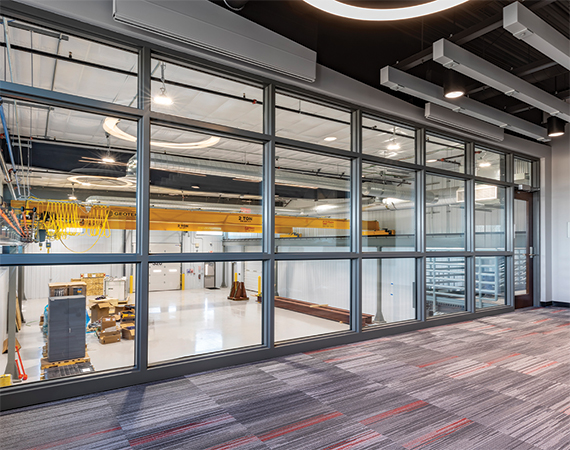
Together the three developed plans for an expandable 105,000-square-foot facility that’s long on natural light, gives engineers a view of the manufacturing floor from their offices, and allows visiting customers to witness both production and testing from a conference room that overlooks the factory. GEOTEK broke ground on the structure in 2023, and the first poles rolled off the line in July 2025.
Same market, new product
For decades, GEOTEK has produced composite products, including fiberglass crossarms for the electric utility industry. In 2022, the company acquired Alliance Composites, a long-time player in the composite light pole market.
The acquisition helped GEOTEK expand its reach in the utility market and “got us into the manufacturing of poles,” says Ken McDonald, GEOTEK’s chief financial officer. That experience led the company to develop and launch the new line of composite utility poles.
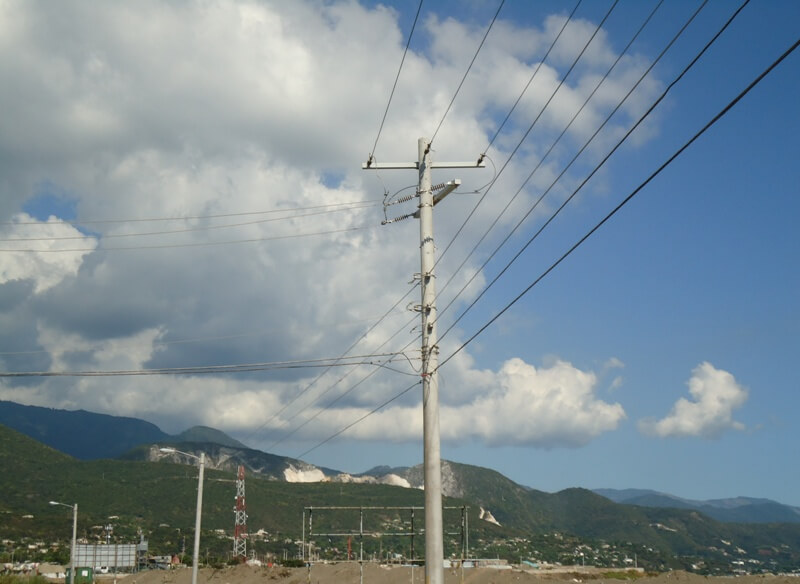
Though composites constitute a small portion of the utility pole market now, it’s an area poised for tremendous future growth. Industry analysts expect significant growth — five to eight percent, compounded annually — in the coming years because of durability, lighter weight, and resilience in severe weather.
The type of pole GEOTEK launched typically lines country roads and city streets to deliver power across the last few miles of the electric grid. The company hopes its poles will be used for all power distribution but initially they are likely to be used in high-strength applications or where grid hardening is required — in coastal areas, along major thoroughfares, or through wet regions where wood doesn’t play as well as composites.
New product, new building
GEOTEK had never manufactured such a long pole, which presented challenges as it planned for the new building. “We wanted the largest spacing that was economically possible because we weren’t sure what the flow of the factory was going to look like to make a 55-foot pole,” McDonald says. “The open spans of 150’ x 300’ are unseen in most manufacturing spaces around here.”
But company officials wanted to go beyond just making a big building. They also wanted to ensure maximum natural light for employees, allow engineers to overlook the factory floor, give potential customers a view of production and testing, and incorporate as much composite construction material as possible.
The ideas for the building’s features came from all three players in the project: GEOTEK, Widseth, and McGough. Together they determined how the building would be positioned on the slightly sloping property, ultimately placing the production floor about 10 feet below the office level, which reduced the amount of dirt, fill, and leveling needed.
The offices, primarily used by GEOTEK’s production management team, overlook the factory floor. “It feels open when you’re in those offices because you’re looking out into this large factory,” McDonald says. “The management team enjoys seeing and studying the flow of product and materials throughout the factory.”
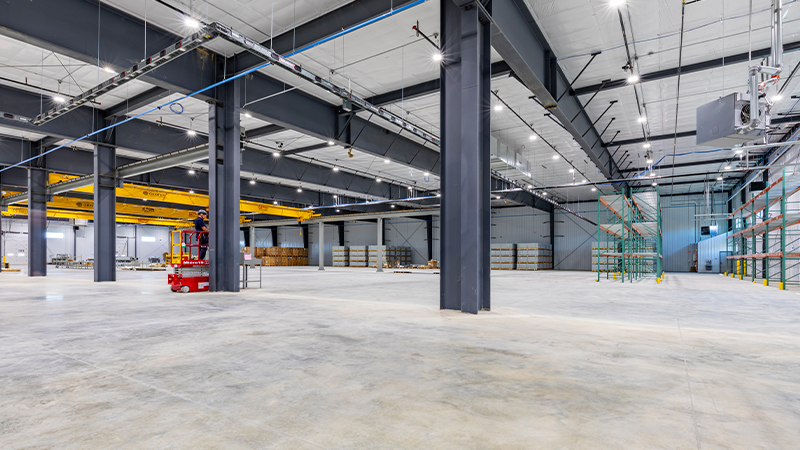
The new structure prioritizes natural light in both the factory and the offices. “You normally see offices along the outside walls, but our offices are on the inside,” McDonald says. “There’s glass in the doors and big windows, so the offices get light as well.”
The other benefit of having the production floor on the lower level is that GEOTEK’s test lab is there. “This is where we take our utility poles to failure. We test them using hydraulic power, and we’ll actually break our own poles. This ensures our products meet or exceed mechanical strength properties,” McDonald says.
The test area is visible from the main conference room on the office level, an ideal space for meeting with potential customers. “We can talk about the product, attributes, and all the positive aspects of our poles, and then customers can actually see us test a product live in our lab,” McDonald says.
Visits in GEOTEK’s two other manufacturing buildings require customers to put on steel-toed shoes, safety glasses, and personal protective equipment and walk three minutes to the test lab. “This new facility expedites our factory tour process. It’s a clean and bright environment with windows and an open feel. You can just watch your products being tested directly in front of you which gives our customers a lot of confidence about quality and performance,” McDonald says.
GEOTEK also challenged Widseth to utilize the company’s other products in the building. GEOTEK light poles are used in the parking lot, entryway, and foyer. The building also uses composites in its stairs and railings and in the trenching in containment areas. “It’s a little nod to our industry, and as the world keeps moving toward more composites and more engineered products, it’s a good showcase,” McDonald says.
Lessons learned
GEOTEK’s original plan included flexibility for future expansion. The new building is 105,000 square feet, but the master plan allows for approximately 400,000 square feet to grow with customer demand for manufacturing the fiberglass utility pole product.
“We built the first half of the first building with a single sloping roof that goes to the middle,” McDonald says. “We basically built half the building. We wanted to see the demand in the market — and it’s exceeded all expectations.”
As the company prepares to launch the second phase of the project, it’s working with its partners to improve the process. “The next 100,000 square feet that we’re going to build will definitely have improvements now that we’ve seen the production work-cell and actually experienced making truckloads of poles,” he says.
“I think the second phase is going to be incredibly smooth and faster than our first phase just because we’ve been working together,” he adds.
Return to the Spring 2026 issue of Enterprise Minnesota® magazine.