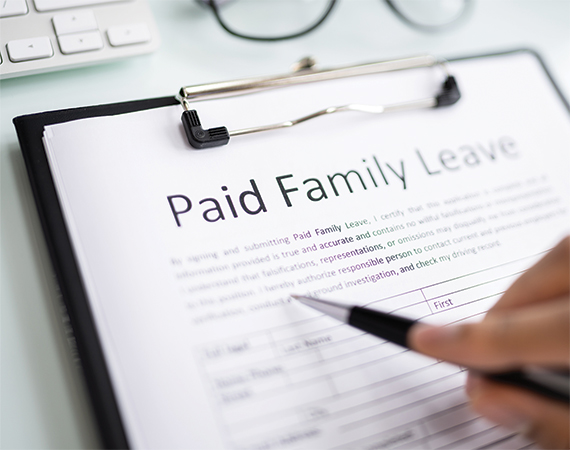
Two years after the approval of the Minnesota Paid Family and Medical Leave law, applications for the program are pouring into the state and employers are figuring out how to cope with the program’s cost and the likely workplace disruptions when workers are off the job for up to 20 weeks.
The law, which was passed in 2023 and went into effect Jan. 1, allows employees to take up to 12 weeks of paid medical leave and 12 weeks of paid family leave to care for a newborn, a seriously ill loved one, or support a deployed military family member — up to 20 weeks combined. Workers who earn total wages of more than $3,700 this year qualify for the leave program, which replaces between 55 and 90% of the worker’s pay. Workers have the right to return to their former jobs when the leave is over. The state-run plan is funded by a 0.88% payroll tax, with half provided by employees and half by employers.
The law may be modified when the Minnesota Legislature meets this year, but for now employers can manage the situation by relying on traditional best practices for training and team building as well as creative approaches to filling vacant jobs.
Start with the basics
“This is going to hit every company differently,” says Michele Neale, an Enterprise Minnesota business growth consultant, who works with manufacturers to develop and implement talent and leadership strategies. Having an employee be absent for weeks at a time is not a new experience for most manufacturers. Creating contingency plans to replace employees in critical roles has always been a good idea, she says. “You never know if an employee is going to win the lottery and leave,” she says.
Start by making sure you have adequate documentation on how to do critical jobs — where to find materials or equipment, what are the steps in a process, who is the task handed off to next, what specialized skills are required. This can be written down, though taking video of employees doing their work and talking about what they are doing and why is often a more effective training process, she says. Artificial intelligence could also be used to capture a process. Documentation has an on-going benefit. It can reduce onboarding time for new employees as well as training replacements during leaves.
In addition to documenting how people do their jobs, cross-training workers so they can operate in more than one area increases an organization’s flexibility in all types of situations, Neale says. Enterprise Minnesota’s Training Within Industry program, for example, includes a module on job instruction, which teaches front line supervisors a four-step process to break down tasks and explain them clearly so that new or replacement employees can begin working quickly. The same type of instruction works well when cross-training employees.
As always, clear and consistent communication is key, Neale says. When an employee takes leave, be sure to know what absolutely must be done in the time they are gone and what can wait. It may be possible to divide tasks among several co-workers. Explore other resources that might be helpful, such as vendors that offer training.
A history of communicating regularly through daily or weekly team huddles builds cohesiveness among employees, understanding of each person’s skills and tasks, and a problem-solving mindset. “If you’ve created a highly engaged team, they’re more likely to think, ‘Hey, I can help out now,’” Neale says.
Creating a substitute workforce
Rep. Duane Quam, R-Byron, remembers when IBM downsized by almost half in the 1990s. The company experienced a critical skills gap, which led it to hire some workers back part-time or as consultants. Something similar might help Minnesota employers as they navigate the new paid leave environment, Quam says.
The law’s current restrictions on how much employees can earn before they reach full employment status would limit such a plan’s usefulness for now, but Quam is hoping to include a new worker category in modifications to the law.
“If we are going to have people off the job for 12 weeks, possibly 20,” Quam says, “it would make sense to create a special classification for people to sub in for those on leave.”
This would be a designated substitute workforce. “They work only when an employee is on leave, and when that employee comes back, it’s fully understood by all parties that the position they are in is temporary,” Quam says. Recent retirees, who have the skills and may miss the camaraderie and pay of the work environment, might be the most likely people to take advantage of the new classification.
“It could be a win-win,” he says.
The new classification is one of several changes to the law that will likely be proposed in the 2026 legislative session, Quam says. He encourages manufacturers that have particular circumstances or problems related to the law to contact their industry organizations and request that those situations be incorporated in any new legislation.
Return to the Spring 2026 issue of Enterprise Minnesota® magazine.